

Understanding LOCAL GOVERNMENT REORGANISATION
Do you know what your future authority will inherit?
Helping local authorities understand the populations, needs, demand pressures and funding challenges they will inherit through Local Government Reorganisation.
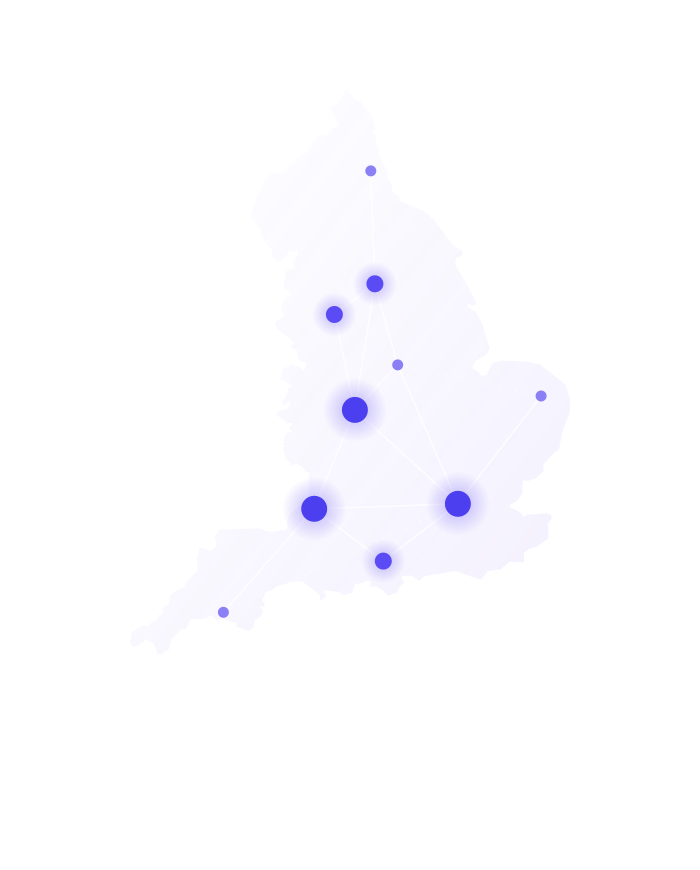

Local Government Reorganisation is creating new authorities across England. But while boundaries may change, the people who rely on services, the needs they present with and the pressures facing councils will remain.
Before councils can redesign services, align policies or make long-term decisions, they need a clear understanding of the populations and demand they will inherit.
The challenge isn't just changing boundaries.
It's understanding what sits behind them.

What need will your future authority inherit?
Future authorities need visibility into the populations they will support, where need is concentrated, and how demand differs across predecessor authorities.

What pressures are already emerging?
Demand, complexity and cost pressures do not appear evenly across a region. Understanding where they exist helps inform future planning and commissioning.

Where do inherited approaches differ?
Successor authorities often inherit different assessment approaches, funding frameworks and decision-making processes. Visibility is the first step towards consistency.

What should be prioritised first?
With limited capacity and significant change underway, future authorities need a clear view of where to focus attention first to protect the people most reliant on their services.
INTRODUCING THE LGR READINESS FRAMEWORK
A practical framework for preparing for Local Government Reorganisation
A practical first step for councils preparing for Local Government Reorganisation.
Many councils are not yet in a position to make major long-term commitments about how future services will be designed and delivered. But they can begin building the evidence base that those future decisions will depend on. The LGR Readiness Framework is designed for exactly that - a structured, low-risk starting point that works with information councils already hold.
Why start now?
Councils are under significant pressure. The LGR Readiness Framework is designed to be a practical, proportionate first step - not a major transformation framework.
"The time to build the evidence base is before you need it - not after the decisions have been made."

Why visibility matters
No new authority should begin life without understanding the communities it will serve, the pressures it will face, and the decisions it will need to make from day one.

TRUSTED BY LOCAL AUTHORITIES ACROSS ENGLAND
Supporting 1 in 4 local authorities across SEND and Adult Social Care
For almost 35 years, we've worked alongside local authorities to help create more consistent, transparent and evidence-based decisions across SEND and Adult Social Care.
Today, councils across England use Imosphere solutions to understand need, improve consistency and support better decision-making.









SEND & ADULT SOCIAL CARE
How councils build visibility
The approach is supported by the same tools already helping local authorities make more consistent, evidence-based decisions across SEND and Adult Social Care.

Frequently asked questions about LGR
What is Local Government Reorganisation (LGR)?
Local Government Reorganisation (LGR), sometimes referred to as local authority reorganisation or local government restructuring, is a government-led programme replacing two-tier county and district council structures in England with new unitary authorities. It covers 21 regions, with new authorities due to formally take on responsibilities (known as "vesting day") from April 2027 for the trailblazer area (Surrey) and April 2028 for the rest. In the run-up to vesting day, "shadow" authorities begin operating as new legal entities, making their own decisions about future systems and services ahead of taking on full responsibility. Throughout this process, councils must continue delivering services without interruption, so successor authorities need a clear understanding of the populations, services, assets and demand pressures they will inherit.
Which councils and regions are affected by LGR, and when?
Local Government Reorganisation covers 21 areas of England, affecting county councils, their constituent district councils, and in some areas neighbouring unitary authorities too. Surrey is acting as the trailblazer, with its new authorities formally taking on responsibility from April 2027. All other confirmed areas follow a common timeline: shadow authorities begin operating from May 2027, with new unitary authorities formally taking on full responsibility from April 2028. Not every area has a confirmed structure yet, and a small number face additional uncertainty, including legal challenges to the proposed changes. Councils, staff and residents in affected areas can check with their local authority for area-specific timelines and decisions.
Does every area go through LGR in the same way?
No. While the outcome in every area is a move from two-tier to unitary structures, the starting point and resulting shape vary considerably by region. In some areas, a single county council area is being divided into two or more new unitary authorities. In others, a county council and one or more existing unitary or borough councils are being recombined into a different set of unitary authorities. Some areas also face additional uncertainty, including legal challenges to the proposed structure. Because of this variation, each successor authority is likely to inherit a different mix of populations, services and existing ways of working, which is why understanding what's being inherited is an essential first step before redesigning services.
What is a successor authority?
A successor authority is a new council created through Local Government Reorganisation. It begins life as a "shadow" authority, operating in parallel with the predecessor councils it will replace, before formally taking on full legal responsibility for services, staff and assets on vesting day. From that point, it delivers services to the combined population it inherits. Successor authorities need to understand the needs, demand pressures and approaches they inherit so they can make informed decisions about future services, commissioning, and investment.
Why does Local Government Reorganisation create challenges for councils?
LGR affects every part of a council, from governance and finance to service delivery, commissioning and workforce planning. Successor authorities must bring together different organisations, systems, processes, and ways of working while continuing to deliver services throughout the transition. Alongside these organisational changes, councils also need a clear understanding of the populations, demand pressures and service needs they will inherit. Building that evidence base early helps reduce uncertainty, identify priorities, and support better planning throughout the transition.
Why is Local Government Reorganisation an opportunity as well as a challenge?
Alongside its challenges, LGR also provides an opportunity to review inherited approaches, improve consistency, and make more evidence-based decisions. By understanding population need, demand and variation across the future authority or authorities, councils can build stronger foundations for future service design and long-term improvement, rather than simply replicating legacy arrangements.
How should councils prepare for Local Government Reorganisation?
Preparation starts with understanding rather than redesigning. Before making decisions about future operating models or service delivery, councils should build a clear picture of the people they will support, where demand is concentrated, how needs are changing, and where inherited approaches differ across predecessor authorities. This creates a stronger evidence base for future planning, prioritisation and decision-making.
What should successor authorities understand before redesigning SEND and Adult Social Care services?
SEND and Adult Social Care carry particular risks during LGR, because predecessor authorities often use different eligibility criteria, assessment approaches, and funding models to allocate support to individuals. Before redesigning these services, successor authorities need a clear picture of:
- The population of children, young people or adults they will support
- Current and future demand across SEND and Adult Social Care Service pressures and areas of increasing complexity
- Geographic concentrations of need across the future authority
- Existing assessment and funding approaches used by predecessor authorities
- Areas of variation between predecessor authorities, and what that means for consistency post-transition
Building this evidence base helps councils protect continuity for the people relying on these services, while making informed decisions about future service design, commissioning and resource allocation, rather than simply carrying forward legacy arrangements.
Why is existing council data important for Local Government Reorganisation?
Much of the information councils need already exists within operational data, including assessments, case records and other service information. Together, these records provide valuable insight into population need, service demand, risks of unmet need, and outcomes. The challenge is bringing that information together in a meaningful way so it can support strategic planning across the future authority without requiring significant new data collection.
How does Local Government Reorganisation affect Special Educational Needs and Disabilities (SEND)?
Successor authorities may inherit different funding models, assessment approaches and patterns of need recorded across predecessor councils' Education, Health and Care Plans (EHCPs) and wider SEND provision. Understanding where demand is concentrated, how needs vary across the future authority and where approaches differ can help councils create more consistent, transparent and evidence-based SEND services for children and young people.
How does Local Government Reorganisation affect Adult Social Care (ASC)?
Adult Social Care teams may inherit different assessment practices – including how Care Act assessments are carried out and how indicative budgets are calculated – as well as service models and demand profiles across predecessor authorities. Building visibility into population need, service pressures and geographic variation helps councils make more informed decisions about commissioning, service alignment and future delivery.
Can councils use existing assessments and EHCPs to support LGR planning?
Yes. Care Act assessments, Education, Health and Care Plans (EHCPs) and other case records already capture detailed information about individual needs, circumstances and support arrangements. Read across a predecessor authority's full caseload, this data can reveal patterns in demand, complexity and service pressure that would otherwise take significant new analysis to establish. For councils preparing for LGR, this means the evidence base can be built substantially from records they already hold.
How does Local Government Reorganisation affect Special Educational Needs and Disabilities (SEND)?
Successor authorities may inherit different funding models, assessment approaches and patterns of need recorded across predecessor councils' Education, Health and Care Plans (EHCPs) and wider SEND provision. Understanding where demand is concentrated, how needs vary across the future authority and where approaches differ can help councils create more consistent, transparent and evidence-based SEND services for children and young people.
START THE CONVERSATION
Before you redesign services, understand what you're inheriting.
Talk to Imosphere about understanding need, demand, spend and future pressure across your future authority footprint.

Solutions that put people first in social care and SEND.