

What could Individual Support Plans mean for schools and local authorities?

Individual Support Plans (ISPs) could change how schools and local authorities deliver and oversee SEND support. As preparation begins, the practical questions are coming into focus: how reviews would work, how support stays consistent across settings, and how to keep visibility across larger cohorts without adding workload.
The SEND reform conversation is quickly becoming operational
Much of the ISP debate has focused on policy. For the schools and local authorities who would deliver it, implementation matters just as much. The question is no longer whether change is coming, but how support can realistically be coordinated, reviewed and monitored in systems already under pressure.

Questions emerging across the sector
How would schools manage additional review and coordination activity?
How could support remain consistent across settings and organisations?
How might schools and local authorities maintain visibility across larger cohorts?
How do we avoid creating additional administration, duplication and fragmentation?
What are Individual Support Plans (ISPs)?
Current SEND reform proposals suggest that Individual Support Plans could become a common layer of SEND support across more children and young people.
Children with an EHCP would also have an ISP, while others may have an ISP without an EHCP. Much about how this would work in practice is still unconfirmed: who oversees ISPs, how reviews run, and how consistency is held across settings.
That uncertainty is exactly why schools and local authorities are focusing on operational readiness now, ahead of any final decisions.
The operational challenge may become as important as the policy challenge
Because ISPs would sit across a much wider group than EHCPs do today, and children with an EHCP would hold both, the number of plans to write, review and keep visible could rise sharply rather than simply shift from one process to another.
Most schools and local authorities are already managing demand, workforce pressure, review backlogs and disconnected systems.
The real concern is less about the policy than about delivering it at that scale sustainably: holding visibility, consistency and oversight without adding duplication or admin.
That is why attention is turning to the operational infrastructure beneath SEND, and how review activity, oversight and support planning could work more consistently across settings.
How schools and local authorities are beginning to prepare
One theme is common to both: this will need connected operational approaches, not disconnected administrative processes.

Schools and Trusts
• Consistent review management across settings
• Sustainable SENDCO workload planning
• Tracking interventions and provision
• Reducing administrative duplication

Local Authorities
• Oversight at scale across larger cohorts
• Visibility beyond traditional EHCP processes
• Shared workflows with schools and trusts
• Operational transparency and reporting
The role of technology and AI in SEND workflows
AI and digital workflows are part of this too, though the sector’s interest is cautious and pragmatic.
The strongest appetite is for assistive tools that improve visibility, strengthen consistency, reduce admin and support collaboration, rather than anything that replaces professional judgement.
Many organisations are looking at how digital systems could help manage reviews, improve oversight and reduce fragmentation as demand grows.
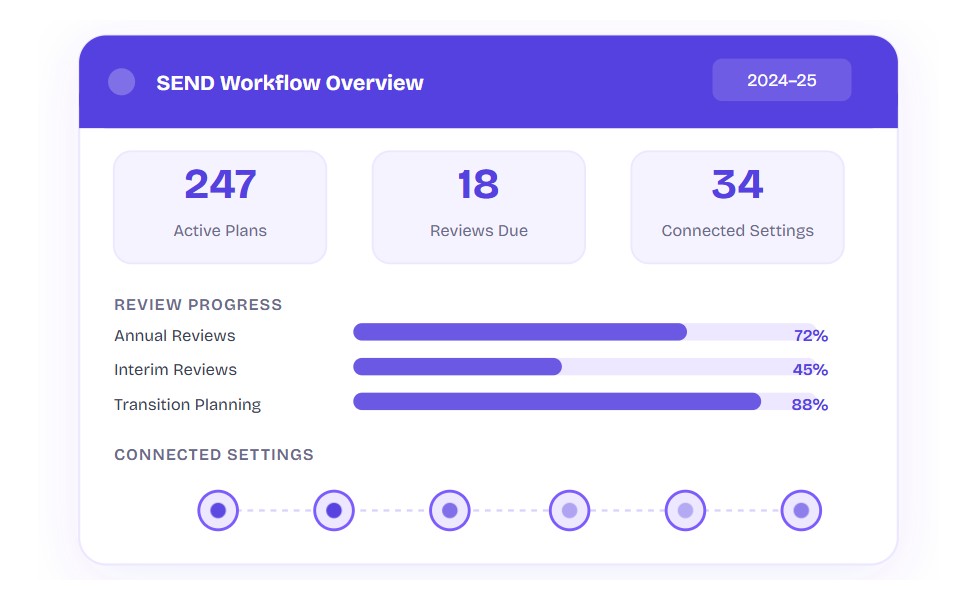
SHAPE NATIONAL SOLUTIONS
Help shape our new ISP solution
We're working with schools and local authorities to develop technology that makes SEND planning simpler, reduces administration, and supports better outcomes.
We're now inviting organisations to help shape what we build.
Frequently asked questions about ISPs
What operational challenges could local authorities face if ISPs scale?
Local authorities may need clearer visibility across support activity, review processes, patterns of need and collaboration between settings. Questions around oversight, consistency and operational transparency are already emerging across the sector.

Solutions that put people first in social care and SEND.